
Thursday, January 14, 2010
3 soil problems & solutions
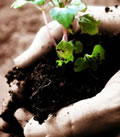
There are many soil problems. One of the problems with soil is that we are running out of good fertile soil to plant things in. Many people try to plant seeds in rainforest soil which ruins the soil. It ends up with the land being dead and the plants not growing. A solution to that problem is that people should stop planting in rain forests because it is bad. Another problem is that more and more things are being built on unsettled land and we don't have enough room to farm. As lands are being taken over, bought, and dug up, we have less and less soil to plant things on. The last problem is that a lot of trash are being buried in soil and not all of the trash can be biodegradable. Such things as plastic and styrofoam cups may take years to biodegrade. We should not dump trash in landfills but instead recycle.

Human Footprint DVD
Three things that I learned from the Human Footprint DVD is that humans are accumulating too much trash, we don not recycle enough, and that we need to conserve. The DVD showed astonishing numbers of how many diapers we use, how much milk we drink and the costs of having cow farms. We use too much plastic which we do not recycle and goes into landfills. A lot of our trash just goes into dumps. They only showed our human footprint for certain things such as diapers, bread, etc. but humans use lots of nonrenewable resources and we need to stop before things get worse.

Thursday, December 17, 2009
Soil Preservation
Soil Preservation from erosion is more important than saving endangered species or finding other energy sources. The reason behind this is that crops grow on soil and if the soil we grow food on gets eroded or ruined, then it will be harder to plant crops and harvest food. This is a significant part of humans' lives. Agriculture is the most important part of society because it is the part that feeds all people. If there is no agriculture, humankind may not last.
Thursday, December 10, 2009
The Green Revolution
In my opinion, the Green Revolution is good because it has developed more varieties of wheat. It is an agricultural research station. It allowed food production to keep up with world wide population growth. The Green Revolution has started many programs that helps countries such as Mexico do this.


Food Safety Policy/Law for the U.S.
In the United States, we do not uphold any regulations or laws that force genetically enhanced foods to be tested before the products are put onto the shelves of supermarkets. Consumers are not informed that some of the foods that they are purchasing and eating are actually genetically enhanced. This poses many problems because the genetically enhanced products may cause allergic reactions or cause death to people and the public will not know the cause. We, as consumers are blindly buying into the genetically modified products and they are not even labeled or tested.
My policy for safety in genetically modified objects would be that all genetically modified foods and items must be tested for any side effects and each product that is approved to be put into sale must have labels that indicate that they are genetically modified. The incentives are that people will be safer and GMO's that follow this law will be able to be sold. The sanctions will be if any company disobeys this policy they will receive lawful punishment and fines.
This policy will increase public safety when it comes to food because now people will know what they are purchasing, whether it is natural and organic or genetically modified. We might also figure out if these GMO's cause any illnesses, diseases, allergic reactions, or even death.

My policy for safety in genetically modified objects would be that all genetically modified foods and items must be tested for any side effects and each product that is approved to be put into sale must have labels that indicate that they are genetically modified. The incentives are that people will be safer and GMO's that follow this law will be able to be sold. The sanctions will be if any company disobeys this policy they will receive lawful punishment and fines.
This policy will increase public safety when it comes to food because now people will know what they are purchasing, whether it is natural and organic or genetically modified. We might also figure out if these GMO's cause any illnesses, diseases, allergic reactions, or even death.

Preventing Food Diseases
In order to prevent obtaining illnesses and diseases from food such as food poisoning, we can take many steps to keep ourselves healthy and safe. One good way of preventing food diseases is to have separate cutting boards for vegetables and meats. That is because raw meat can have bacteria that can be passed on to vegetables if we cut them on the same board. Also we should cook all meat until there is no more blood to ensure safety. Always wash your hands under warm water for about twenty seconds before handling any foods.

Thursday, November 19, 2009
3 Factors That Lower Biotic Potential
There are many factors that lower biotic potential but there are three that are the most significant factors in my opinion. Biotic potential is the maximum reproductive capacity of a population under optimum environmental conditions. Environmental resistance restricts full expression of biotic potential. The three factors that do this are famine, natural disasters, and weather.

Biggest Impact Humans Have Had on the Planet
After watching Earth After People, I think that without humans, the earth would go back to the way it was before when there was no buildings or signs of civilizations. Animals would run free and live by the idea of survival of the fittest. The world would be darker because there would be no electricity or light. I think the biggest impact that humans have on the planet is our ability to control areas and build things on top of it. We don't let things such as plants or trees take over the planet but instead we make things organized. We also have negative impacts on the planet such as pollution and overusing the earth's resources.

Thursday, November 5, 2009
Individual characters/Population sizes
Individual characters of animals affect their population sizes. This can be seen in the studies of Darwin during his stay at the galapagos islands. He studied finches in all the islands and he saw that the finches had different characteristics because they had to adapt to the environment around them. So for certain islands, only a certain kind of finch with features and characteristics that fit the surroundings would be found in a large population while other finches would have low or no populations in those areas.

Four Types of Competition
There are four types of competition in the environment that exist within the animal kingdom. These types of competition determine which animals are superior and get to thrive within a certain area in a specific area. Intraspecific competition is the competition for resources between two of the same species. An example of this is two guys fighting for one girl or two of the same birds fight for one nest. Interspecific competition is the competition for resources between two different species. An example of this type of competition is a cat and dog fighting over a bowl of food.

Thursday, October 22, 2009
importance of eating lower on the food chain
It is very important to eat lower levels of the food chain such as producers. Some examples of producers that are good to eat are plants and vegetables. We should also eat fruits such as apples and bananas. It is not only good for the environment, but it is also good for our personal health because most producers are healthy to eat. Beans and tofu is also good to eat.

Thursday, October 15, 2009
why some animals/plants are stronger but weaker animals/plants thrive
Some large and strong animals such as a wooly mammoth or a dinosaur have become extinct in today's world but other animals such as cockroaches and plants such as fungi and lived to survive the millions of years of natural disasters. In my opinion the reason to this baffling question is that bigger animals are more prone to get wounded during natural disasters such as the ice age in the case of the dinosaurs but smaller plants and animals can be missed by these things. Cockroaches are also a fascinating type of animal that can withstand a nuclear bomb so that is also a big factor.

Monday, October 12, 2009
most important person in environmental science
I think out of all the people mentioned in chapter 3, the most important person to the cause of environmental science would have to be Audobon because although he only started the bird rescue movement, it also lead to the formation of the audobon society which does more than save birds in the environment. They do alot of work for the environment and even more all due to him.

Thursday, October 8, 2009
endangered animals
An endangered species I think that we should save is the giant panda bear. The population of these animals are at its lowest and we should help save them from hunters and poachers. Pandas are rarely found in the wild but most are located in areas in China. Here is a rescue site link for various animals including the giant panda: http://www.webring.com/hub?ring=animalrescue

Thursday, September 24, 2009
Differences between chaotic, orderly and complex
There are many differences between chaotic, orderly, and complex things in environmental science. Chaotic means it is random, orderly means it has patterns and complex can have patterns but they are more complicated. Many things are chaotic like when you drop a deck of cards it is chaotic. It is orderly when you drop a backpack because nothing may fall out of it.

Thursday, September 17, 2009
How is environmental science different from other science like biology and chemistry
Environmental Science is different from other sciences such as biology and chemistry because in this science, there are things that are impossible to predict. Some things that are impossible to predict are things like the weather, earthquakes, etc. There are too many factors that it is impossible to compute the outcome. Another unique thing about environmental science is fractals and chaos theory. Fractals are things that repeat itself over and over by chance such as snowflakes or lightning.

Tuesday, June 9, 2009
Brain and Learning
The brain is the central power of the human body. It can store a lot of information as well as control the other parts of the body. The brain is necessary for a person to learn something new. It stores things in different parts of the brain. Some parts store memory, short and long term. Other parts store things like reaction and how to do something. Then there's also the part where it stores information you learn like math in school.

Wednesday, May 20, 2009
Ramachandran's Experiments
Ramachandran performed many experiments but the one that I thought was most interesting was the experiment about a man who got in a car accident. He remembered everything that happened before the accident but now he has short term memory loss. Every 60 seconds, he forgets everything. Ramachandran would do experiments like showing him where a pen is but in 60 seconds he would not remember where it was or even who Ramachandran was.

Reproduction
I knew a lot about reproduction before this class but I learned many interesting about reproduction after being in this class as well. Some interesting things I learned were about the physiology of reproduction. I learned about libido and how communication increases libido for women. I also got to see a video of the whole reproductive system and organs. I think I have a vast knowledge of reproduction now.

Wednesday, May 13, 2009
Male and Female Dissection
I learned a lot from the male and female dissection video. The video was very graphic and it showed all the organs of the male and female body. I got to see the anatomy of a male's penis inside and out. They showed the inside of a male's testicles which was full of tissue. A woman's uterus was shown and it was also full of glandular tissue. I learned that it expands when a woman is pregnant so it makes room for their baby.

Subscribe to:
Posts (Atom)

 Posts
Posts

